
Fino Tax, without the dread
Germany has over four million freelancers, and most run their tax admin across Word, Excel and a folder of receipts handed to an advisor once a year. I led Fino’s design end to end: a mobile product that absorbs the rules of the German tax system and surfaces only the decision in front of you.

Invoices must meet strict legal requirements. VAT (Umsatzsteuer) is declared quarterly through ELSTER. Expenses have to be categorised the way the Finanzamt expects, and the Kleinunternehmerregelung splits freelancers into two tiers with different obligations.
The market leaves a gap. DATEV is built for accountants; Lexoffice and Fastbill stop at invoicing. Nothing handled the full freelance stack on mobile.
The briefCarry the full weight of German freelance tax in the background — and only ever show the freelancer what they need right now.
Before opening Figma I interviewed eight freelancers across disciplines, audited the market, mapped year-end task flows and worked through the ELSTER filing process myself.
Fear of invoicing incorrectly was universal. “Just tell me it’s right” came up in five of eight sessions.
→ Legal guardrails inside invoice creation: auto-formatting, required-field warnings, VAT logic driven by registration status.
No product covered invoices, expenses, tax and filing together on mobile.
→ Full-stack scope in one app, including direct ELSTER integration.
Freelancers reconciled income and expenses by hand at year end because nothing offered a live view.
→ A real-time tax view with quarterly estimates that update as income and expenses are logged.
Certificate files and passwords pushed most people to delegate even routine filings.
→ In-app certificate upload and validation, reducing reliance on an advisor for routine filings.
“Freelancers didn’t want flexibility. They wanted guardrails.”
North star — Confidence through structureInvoices
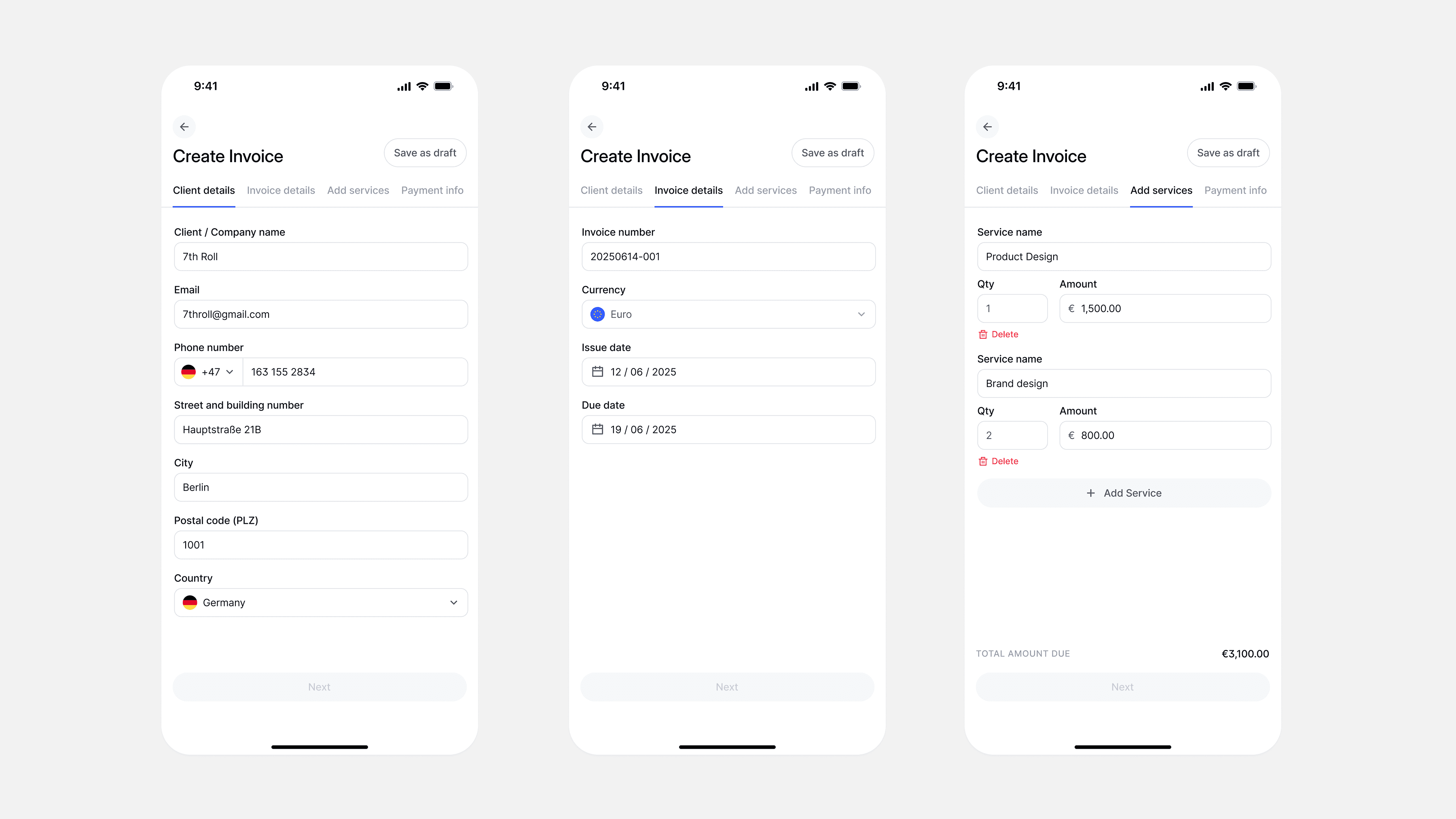
A four-step flow — client, invoice details, services, payment — with a persistent tab strip so progress is never ambiguous. The empty state gets out of the way: one line of copy, one action, no tour.
Expenses
A weekly chart for pattern recognition sits above a chronological ledger. Entry opens straight onto the amount field with the keyboard up; the title is optional and suggested.
Bank sync replaces manual entry for most users. German banks come first, then PayPal and Wise, and a bottom sheet states the security model before anything connects. Categories map directly to the structure the Finanzamt recognises, so exports arrive advisor-ready.


Taxes & ELSTER
This is where Fino differentiates. A quarterly overview breaks down income tax, VAT and deductions, each one tap from detail. Income tax shows progress against the Freibetrag and a projected year-end position; VAT nets what was collected against what was paid, automatically.
ELSTER was the hardest flow in the product. Certificate upload, password and validation had to feel routine despite sitting on top of a government security system. Every state is unmistakable, and success leads straight to the tax forms.


The most consequential work happened outside Figma. Days spent in German tax law, Finanzamt guidance and forum threads reshaped the information architecture — and killed a combined income/expense dashboard once it was clear VAT-registered and Kleinunternehmer freelancers hold fundamentally different mental models of their money.
In high-stakes financial products, removing options is worth more than adding them. Every field cut from the invoice form reduced error and increased completion. The product got simpler as my understanding deepened.